Case study
An Ecosystem of Eligibility
The NAIA Eligibility Center is the gateway to college sports for 40,000 student-athletes every year, but students are just one piece of a much bigger puzzle. Parents, high school counselors, college registrars, coaches, recruiters, and internal NAIA analysts all have a stake in the same system.
When a rebuild stalled under the previous UX firm, we came in, audited what existed, and picked up where they left off — integrating into the team, steadying the process, and delivering a system that finally worked for everyone in it.
CLIENT
National Association of Intercollegiate Athletes
PROJECT TYPE
Application design
INDUSTRY
Sports / Higher Education
SERVICES

Alignment and strategy
Getting everyone on the same page — including us.
Getting up to speed on a stalled project meant working through a lot of material before touching a wireframe. Between the existing analytics, the dev team's epics and user stories, and the sheer number of user types the system had to serve, the first job was making sense of what existed and establishing a direction everyone could build toward.
Assessing the landscape
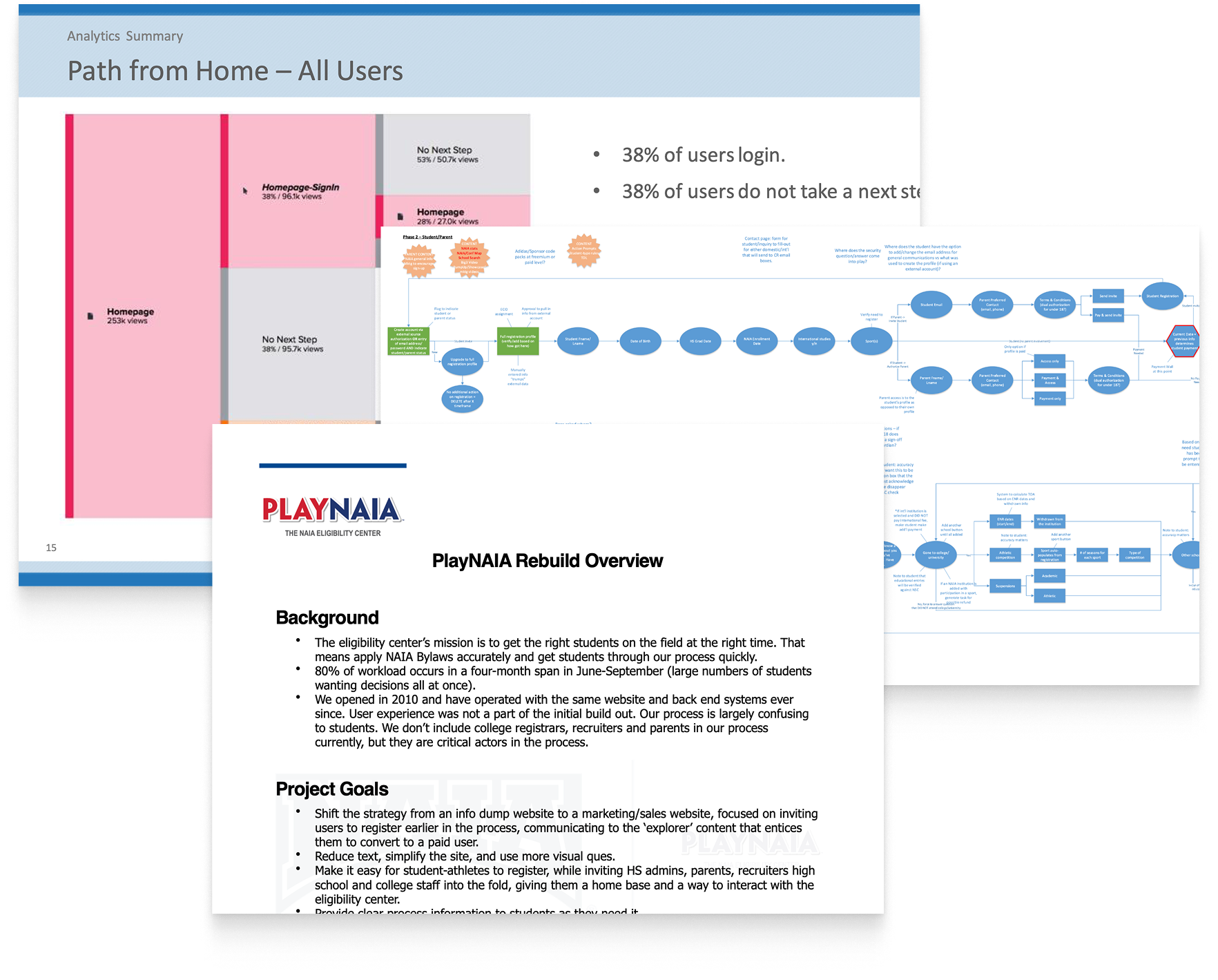
Coming in on a project already in motion meant getting up to speed before we could move forward. Stakeholder interviews helped us get grounded quickly, learning the priorities, constraints, and gaps before touching any existing material. From there it was a lot to work through: analytics reports, epics, user stories, system-level process flows. The existing data showed significant drop-off through registration, but the full picture of why was still being worked out.
Lots of drop-off in the process, and a lot of complexity left to untangle.
CHOOSING PATHS
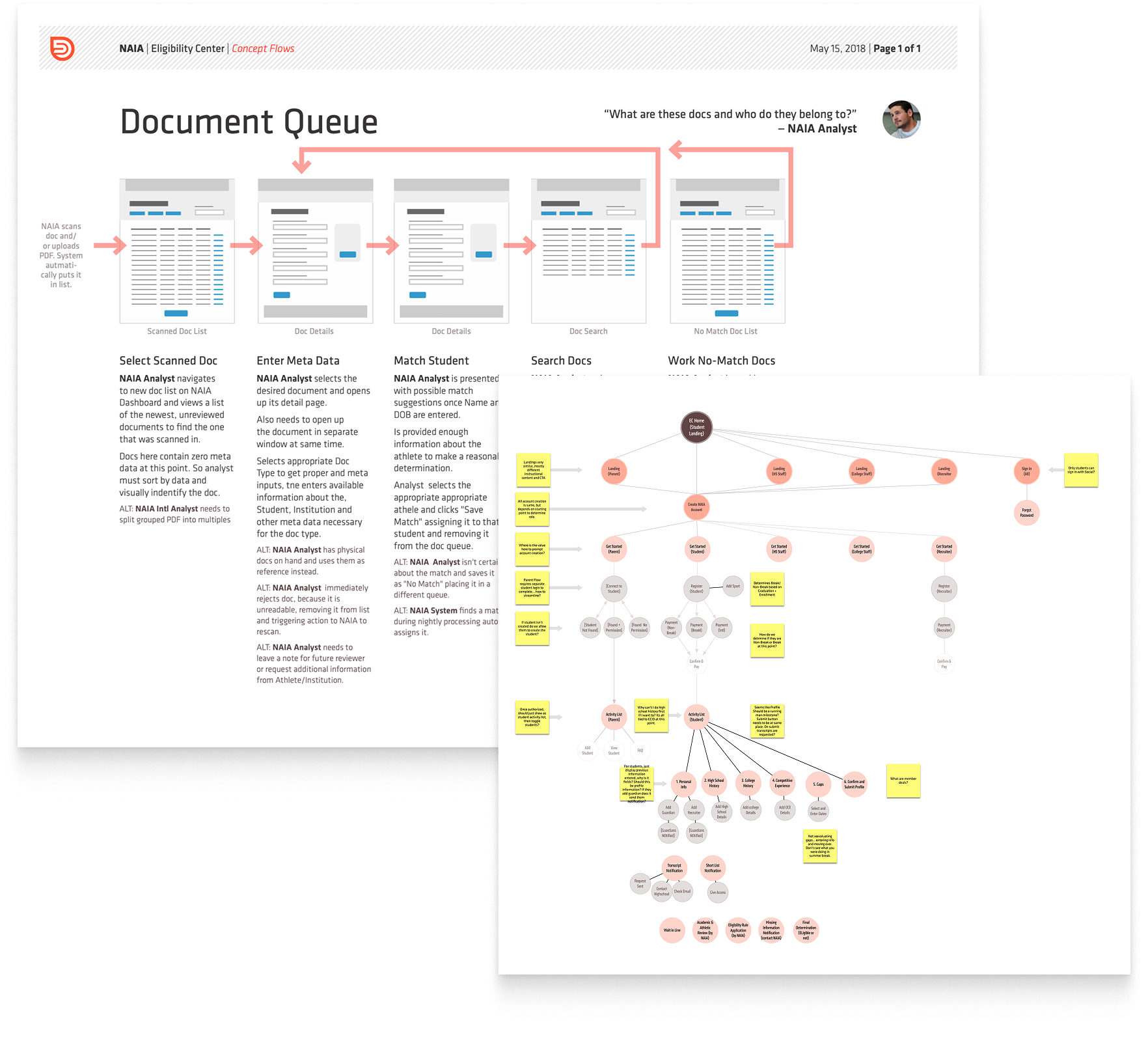
Before wireframing anything, we needed a clear picture of the full system. All the roles, all the primary tasks, all the templates and patterns required to support them. A concept map helped surface that scope across seven distinct user types. Thumbnail flows with narratives gave each role more definition, less formal than wireframes but detailed enough to establish how things should work before committing to layouts.
Seven user types. One system. Each role needed its own path through it.
Roughing it out
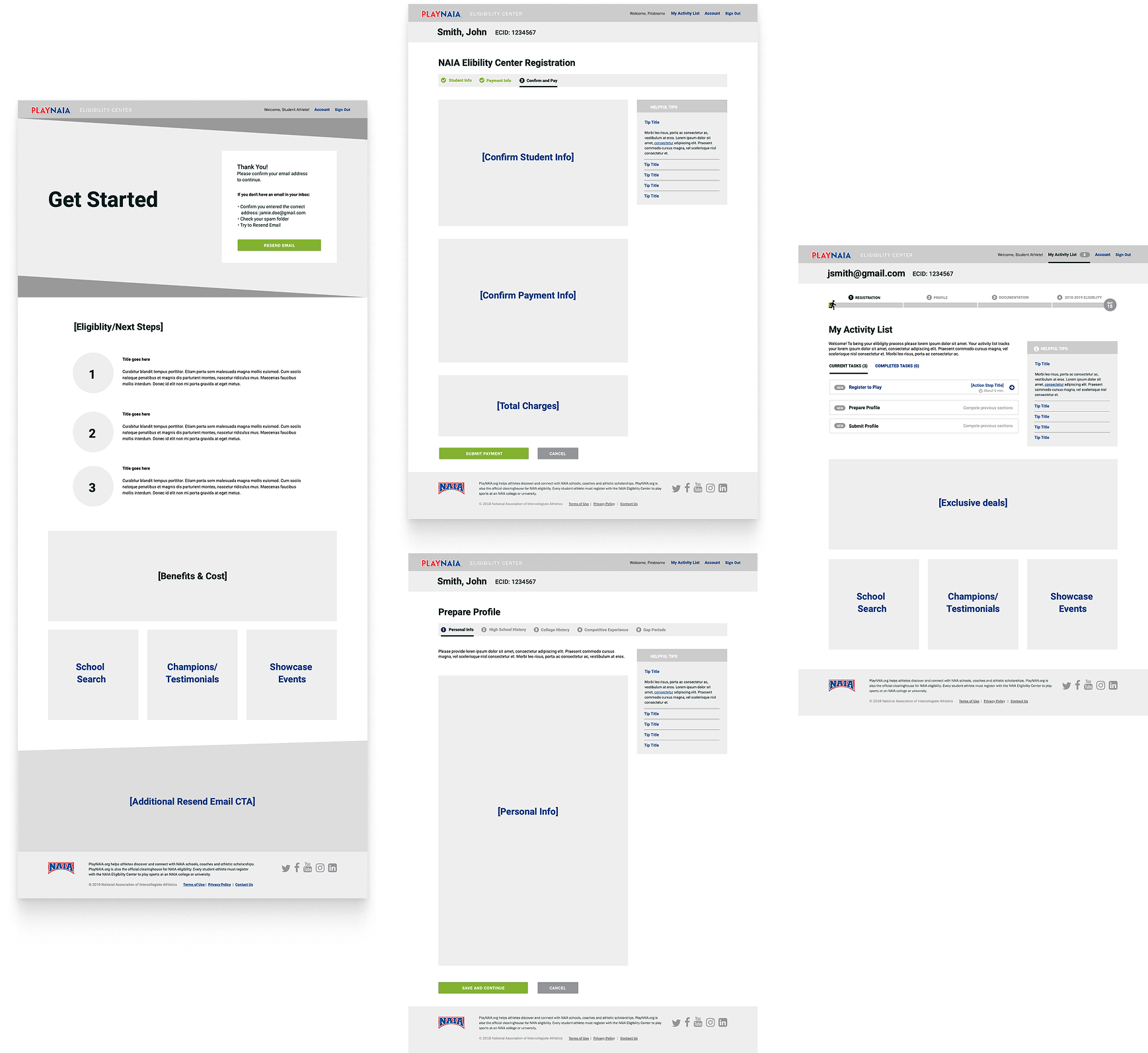
Early lo-fi sketches established the hierarchy of major elements, working out what content lived where, what each template needed to hold, and how typography could help organize it all. Not solving every interaction yet. Just making sure the bones were right before building on them.
Content modeling first. Layouts second. Details later.
Interaction Design
Bringing order to a system where seven different users all needed something different.
The eligibility center had to work for seven different user types — each with their own entry point, their own tasks, and their own relationship to the process. Bringing coherence to that meant detailed work at every level: the flows, the states, the edge cases, and the smaller interactions that don't get noticed when they're right but cause real problems when they're not.
Expectation and status
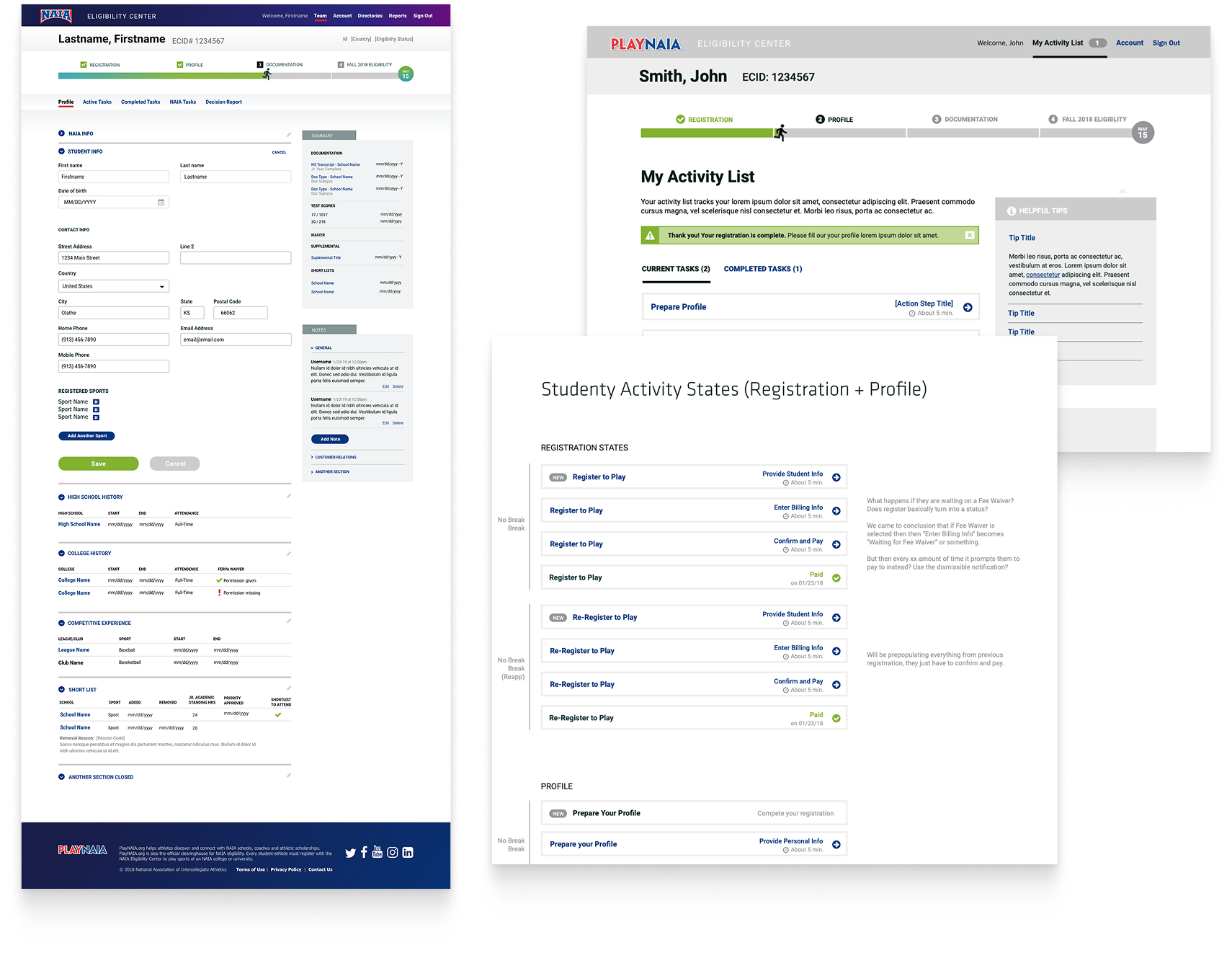
Most athletes don't have everything on hand when they start. Transcripts, school history, sports records, test scores all have to be tracked down, and the result was a lot of starting and stopping. The design response was a task-based dashboard built around that reality. A progress bar, to-do cards with time estimates and due dates, and enough status variation to reflect where a student actually was at any point. Prototypes let stakeholders feel the flow before production began.
Stop, go get what you need, come back — and pick up right where you left off.
Detailed modeling
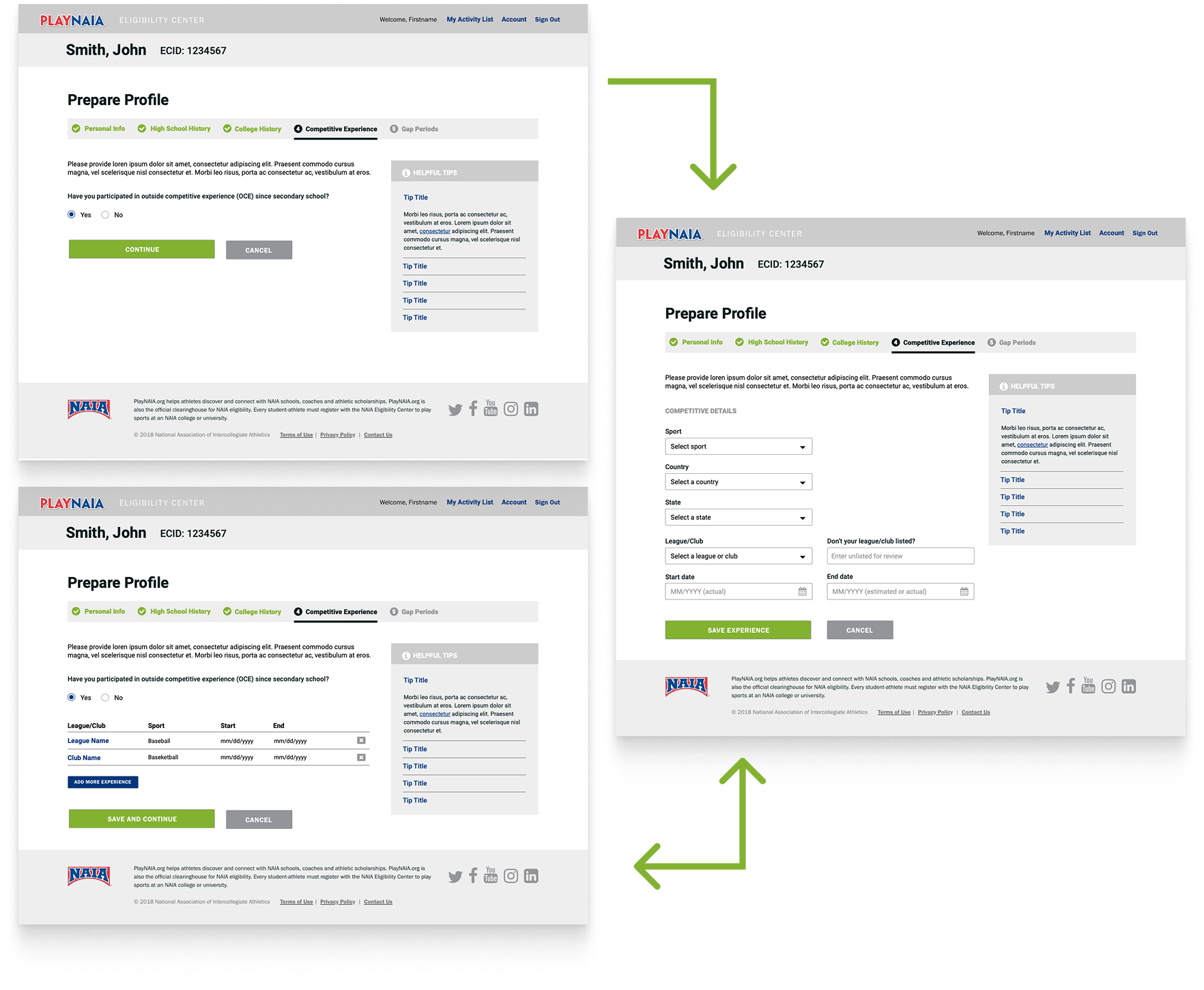
Registration wasn't just a long form. It was a form with forms inside it. Athletes had to document academic history, activity records, and institutional affiliations, often with multiple entries and branching sub-tasks depending on their situation. Interaction modeling worked through all of it: add-another patterns, nested inputs, conditional logic, edge cases. The work that doesn't show up as a flashy screen but determines whether the whole thing holds together.
A lot of the complexity lived inside the forms, the process requires more than just steps.
Specialized roles
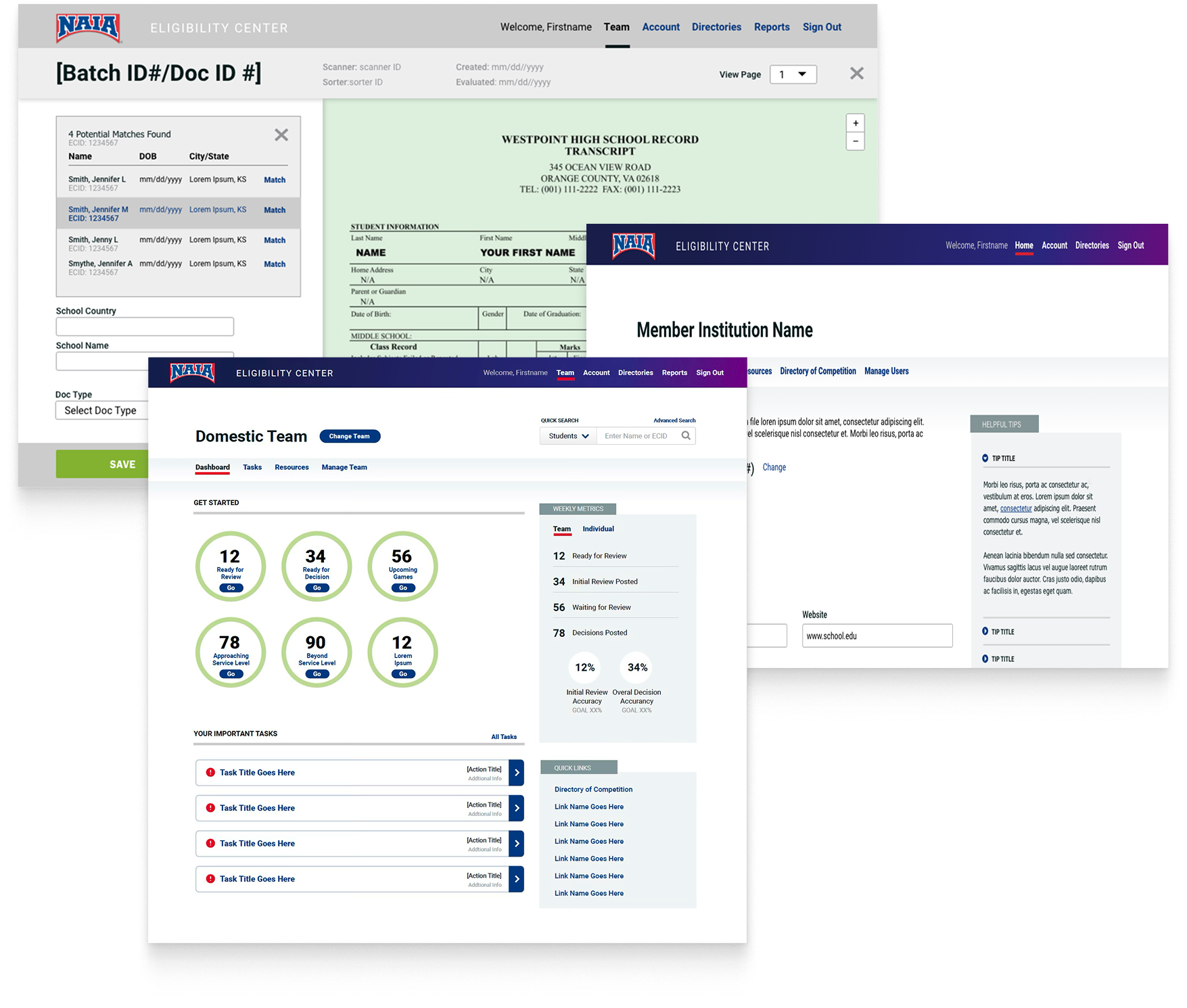
Students were the primary user, but the system only worked if everyone else did too. Coaches, school staff, and NAIA analysts each had their own entry points, permissions, and workflows. The analyst role in particular was underserved. They validate documents, chase down missing information, and make eligibility decisions under real pressure during a four-month peak window. The document queue gave them a proper working environment, filterable and actionable, built around the reality that scanned transcripts don't always match up cleanly with what the system expects.
The right help, at the right step — for every role in the process.
Visual design
An ecosystem needs a face — and it had to feel like it meant something.
The eligibility center wasn't just an application — it had a public-facing side that needed to recruit. For a lot of student-athletes, this would be their first impression of the NAIA, and it had to feel like a place worth going. The visual system had to carry that energy while still functioning inside a process that's mostly forms.
Setting the tone
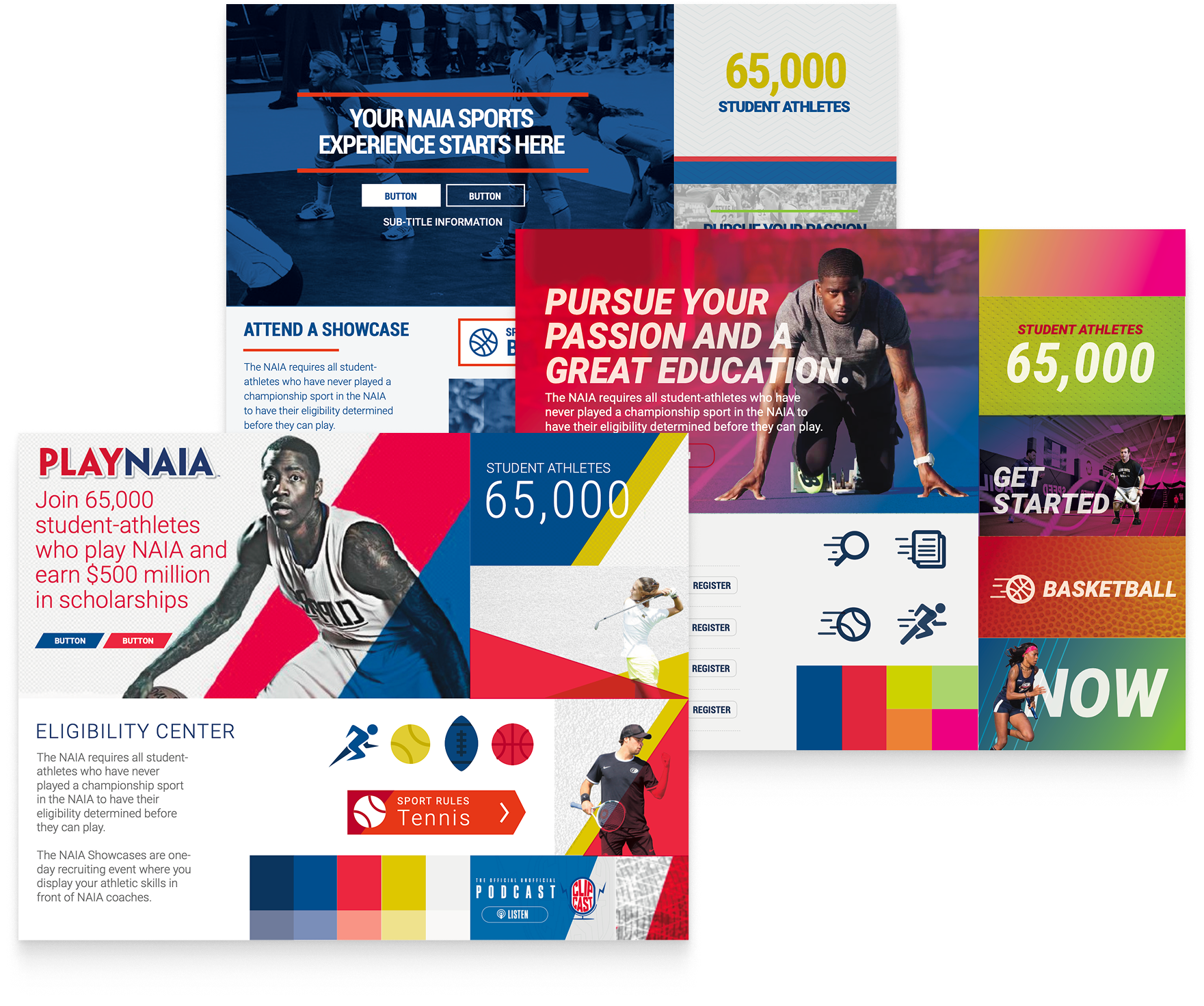
The visual direction research pulled from sports brands: the energy, the confidence, the sense that something is at stake. That was a deliberate choice for a system that had always felt more like a compliance form than a gateway to playing college sports. Style boards gave the team options to react to before committing to a direction. As with most client processes, the final design drew from more than one of them. That's how it usually goes.
Brought sports brand energy where we could.
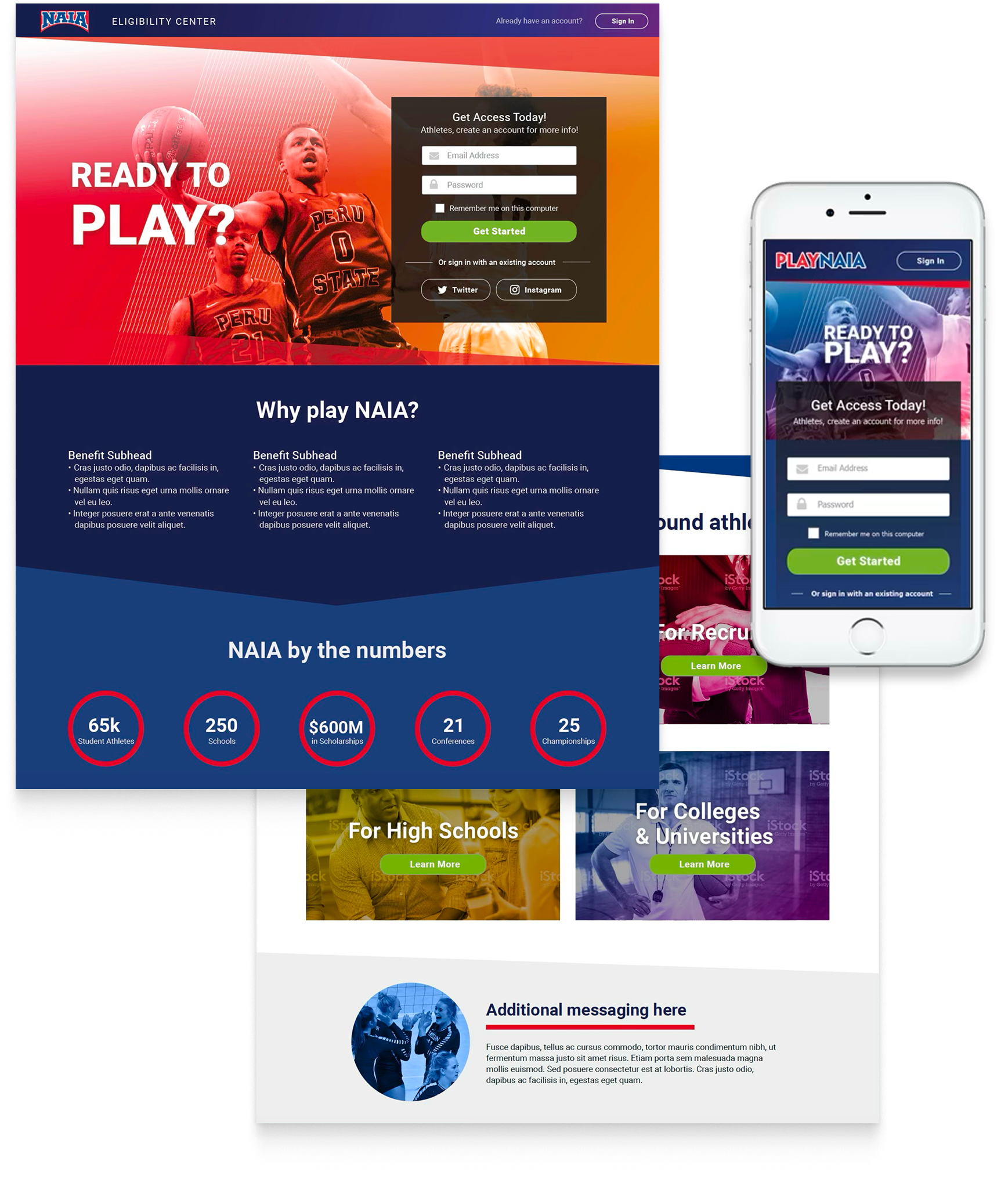
Ready to play
The public-facing side was a conversion tool. Its job was to get students, coaches, parents, and school staff to register before they had to. That meant the right message for each role, working on mobile, and a visual system that actually sold something. The branding carried further into the application than you'd expect from a process that's mostly forms, but the entry points were where it mattered most.
The goal? Make a student-athlete feel like they're going somewhere that matters.
Outcomes
We delivered a unified system for seven user types, designed from scratch where needed and rationalized where something already existed. The design has been in production since 2018, still processing 40,000 student-athletes annually across a network of over 31,000 high schools. The NAIA brought us back later that same year to design Return on Athletics, a data platform for member institutions. Practically speaking, that's the best review a consulting engagement can get.